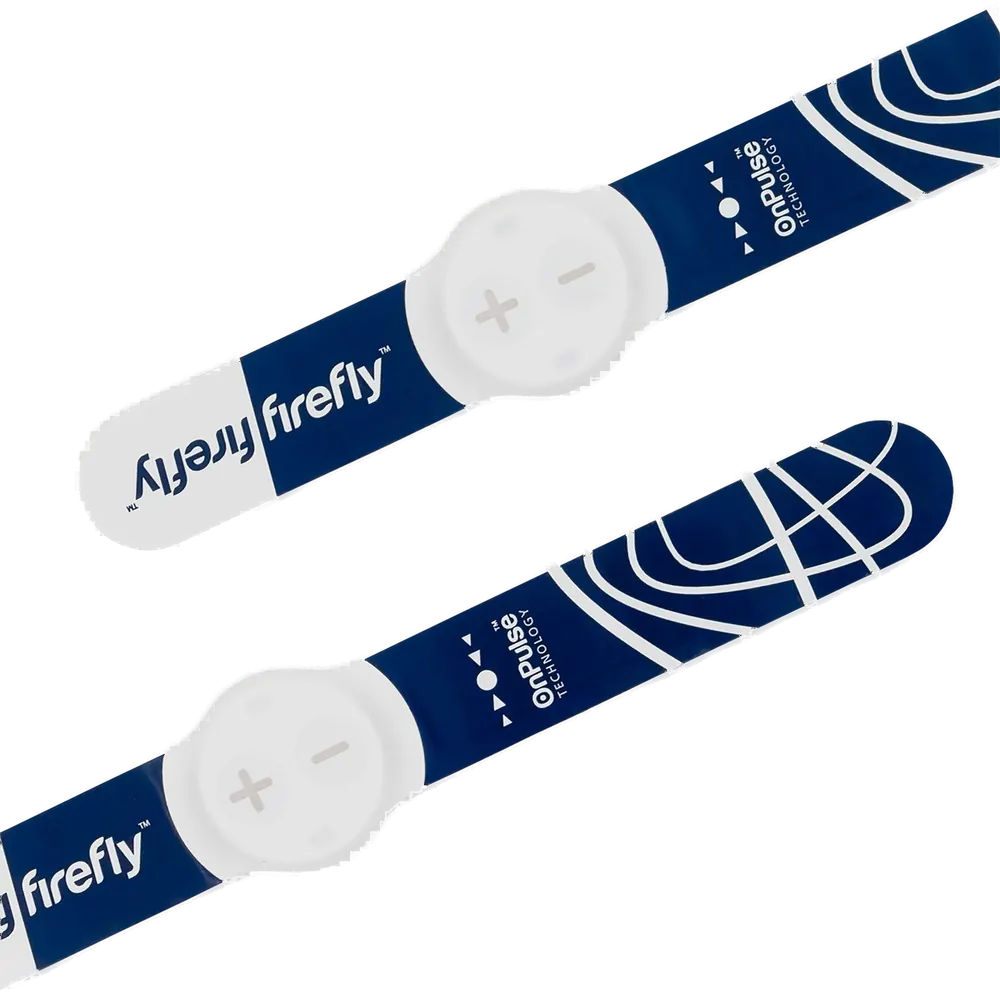
 Image: Firefly Recovery
Firefly
Firefly is a 10 g, wire-free muscle stimulator worn just below the knee, stimulating the peroneal nerve at 1 Hz to drive walk-like calf contractions. It suits long flights, drives and race days. We pick it for its FDA 510(k) clearance, K201131, and 4.86 stars from 2,306 reviews on Firefly's store.
$49 one pair, about 30 hours per device; $264 for six pairs, per Firefly
We may earn a commission from links on this page. Updated October 6, 2026.
Why we love it
It is FDA cleared for exactly what it does. FDA cleared the firefly T-2 through 510(k) K201131 on May 28, 2020, with the indication: "The firefly T-2 is intended for stimulation of healthy muscles in order to improve or facilitate muscle performance." The same file says it is not intended for any medical disease or condition.
It goes anywhere. FDA's 510(k) file lists each device at 10 g and 7.8 x 1.2 x 0.4 inches with no wires or charger, and Firefly rates each one at 30 hours of run time.
You do not have to sit still. Gear Patrol could walk around, wash dishes and fold laundry at low to medium settings, and recommended Firefly for travel and big events.
Owners rate it 4.86 out of 5 from 2,306 reviews on Firefly's store, 90% of them five stars, with reviews as recent as September 2026.
Key features
- Run time
- 30 hours per device, per Firefly; not rechargeable
- Weight
- 10 g per device, 7.8 x 1.2 x 0.4 in, per FDA's 510(k) file
- Settings
- 7 intensity levels at a fixed 1 Hz pulse, per FDA's 510(k) file
- Controls
- Two buttons, plus and minus; no app, wires or charger
- Water
- Not waterproof; keep out of showers, ice baths and pools, per Firefly
- Cost
- $49 a pair, $264 for six, $1,025 for 25, per Firefly
The proof
- FDA cleared the firefly T-2 through 510(k) K201131 on May 28, 2020, with the indication: "The firefly T-2 is intended for stimulation of healthy muscles in order to improve or facilitate muscle performance." Source
- The firefly T-2's 510(k) summary lists compliance with the IEC 60601-1, IEC 60601-2-10 and IEC 60601-1-2 electrical safety and EMC standards. Source
- A peer-reviewed trial of 21 men found peroneal nerve stimulation lowered perceived soreness at 24 hours more than compression socks, with no change in strength or blood markers; FDA's K134001 summary names it as a study of the earlier firefly T-1. Source
- A randomized crossover trial of 28 professional rugby and football players found jump height 3.2% below baseline at 24 hours after 8 hours of stimulator wear, versus 7.2% without it; Firefly lists the trial as its own, though the abstract does not name the device. Source
What owners say
- 4.86 out of 5 from 2,306 reviews on Firefly store (the brand's own store). Source, checked October 6, 2026.
Worth knowing
Each device switches off for good after 30 hours because its battery cannot be replaced, per FDA's 510(k) file. An hour a day for two years takes a $1,025 pack of 25 pairs, which is why Gear Patrol recommended it for travel and events rather than daily use.
Best for
Questions
Is Firefly FDA cleared?
Yes. FDA cleared the firefly T-2 through 510(k) K201131 on May 28, 2020, with the indication: "The firefly T-2 is intended for stimulation of healthy muscles in order to improve or facilitate muscle performance." The clearance also says it is not intended for use with any medical disease or condition. The earlier T-1 was cleared under K134001 in 2014.
How long does a Firefly device last?
About 30 hours of run time per device, per Firefly. FDA's 510(k) file says it then switches off for good because the coin cell battery cannot be replaced, so ongoing use means buying new pairs: $49 for one, $264 for six or $1,025 for 25, per Firefly.
Can you walk around while wearing Firefly?
Yes, at lower settings. Gear Patrol walked around, washed dishes and folded laundry at low to medium settings during sessions. It has no wires and weighs 10 g, per FDA's 510(k) file. Firefly says it is not waterproof, so keep it out of showers, ice baths and pools.
What has research on Firefly found?
Two small trials. In 21 men, stimulation with the earlier T-1 lowered perceived soreness at 24 hours more than compression socks, with no change in strength. In 28 pro players, jump height was 3.2% below baseline at 24 hours with the stimulator versus 7.2% without. FDA's clearance covers muscle performance in healthy muscles only.
Is Firefly cheaper than a reusable muscle stimulator?
For occasional use, yes; for daily use, no. One pair costs $49, while reusable muscle stimulators list at $249.99 to $699. An hour a day for two years takes about 750 hours, or a $1,025 pack of 25 pairs, per Firefly.
About Firefly Recovery
Firefly makes a wire-free device worn below the knee that stimulates the peroneal nerve, prompting walk-like calf contractions while you sit.
Recovery that fits in a travel bag and works on a plane, which is exactly where most of us stop moving.
Firefly Recovery Firefly: $49 one pair, about 30 hours per device; $264 for six pairs, per Firefly
Check price at Firefly RecoveryWe may earn a commission from links on this page.
Featured in Best recovery gear for travel.
More in muscle
 Editor's Pick
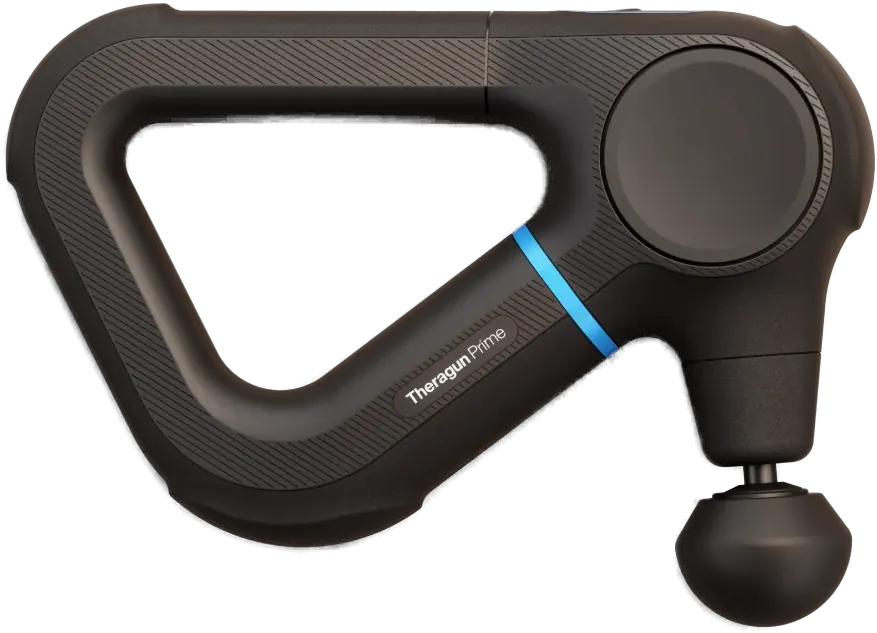
Theragun Prime (6th Gen)
Therabody's core full-size massage gun: 16 mm amplitude, 5 speeds and force meter lights, per its manual.
Best for deep tissue work at home
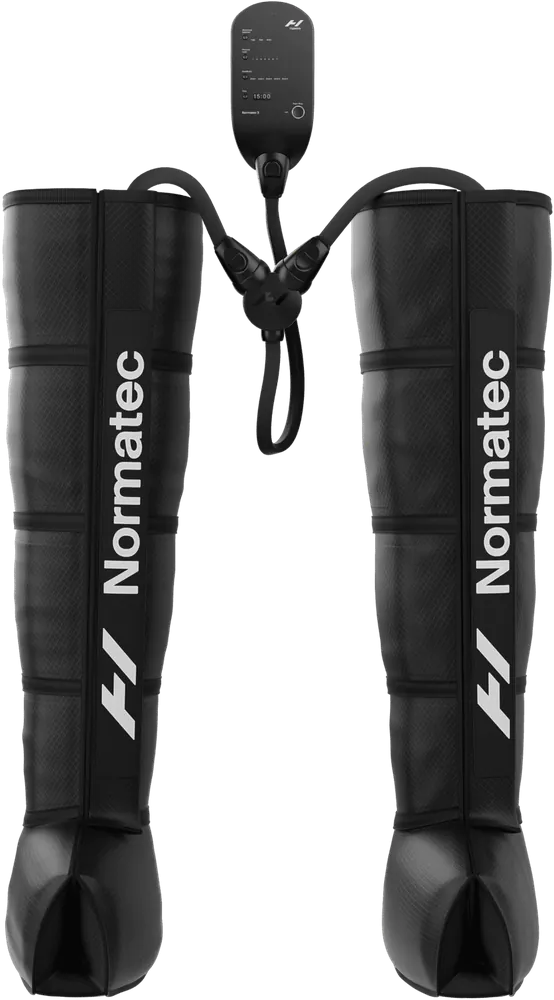
Normatec 3 Legs
Hyperice's air compression boot system: a control unit with 7 levels and 5 zones that inflates leg sleeves up to 110 mmHg.
Best for runners and endurance athletes
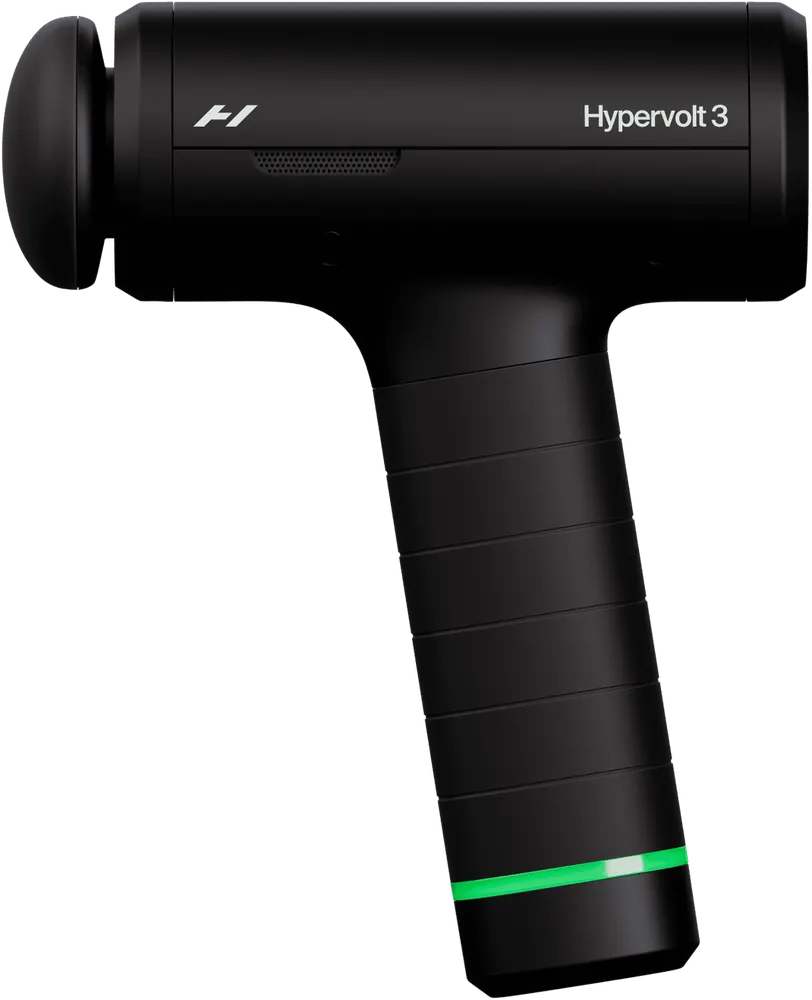
Hypervolt 3
Hyperice's 2026 full-size massage gun, with 5 speeds from 1,500 to 2,500 percussions a minute, a 12 mm stroke and 5 heads including a heated one, per Hyperice.
Best for quiet sessions at home